Got this camera?
Sell it with us.
Free appraisal in 24 h, payment in 48 h and free shipping. We inspect it, refurbish it and give it a second life.
Inspected at 28 points by our technicians. Every unit is unique. More details
Subscribe and save on your order
Get a discount code by email.
Thanks for subscribing.
Use the code at checkout:
CAMERAMARKET10
Protect your purchase for longer.
Your camera ships with 6 months of coverage included. Extend it if you want professional photographer peace of mind.
Units sold for parts do not qualify for extended warranty.
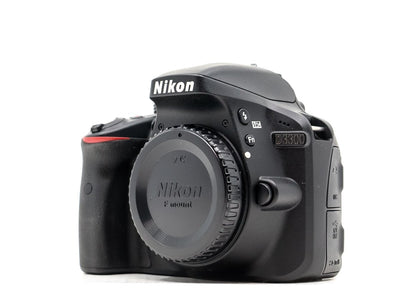
View warranty terms and conditionsThe Nikon D5300, announced in October 2013, is an APS-C (DX format) DSLR from the popular D5x00 series, designed as the "next step" for those coming from an entry-level camera or a smartphone who want to learn photography with real manual controls. It was one of the first Nikons in its range to omit the low-pass (AA) filter, giving it notable detail with its 24.2 MP sensor, still competitive today. It also added built-in Wi-Fi and GPS and Full HD video at 60p with a microphone input, an unusual combination in the entry-level range of its time.
It is a camera for the enthusiast who wants to level up: it lets you shoot in manual, control depth of field, record quality video, and take advantage of its fully articulated screen for difficult angles, video, or ground-level shots. It is not a professional body nor does it pretend to be. As a second-hand purchase, it still makes a lot of sense for value for money, as long as you understand two things: it has no in-body stabilization (it depends on the lens) and it has no internal focus motor, so autofocus requires lenses with their own motor. If you are clear on that, it is an excellent entry into the Nikon F system.
Read more Read less
The Nikon D5300 is a digital SLR (DSLR) camera with a 24.2-megapixel APS-C sensor, released in 2013. It is a very popular model among advanced hobbyists looking for a balance between image quality, connectivity, and ease of use, without needing to change lenses.
Key Features
- DX-format (APS-C) CMOS sensor with 24.2 effective megapixels.
- Nikon F mount, compatible with a wide range of Nikkor lenses.
- Full HD (1080p) video recording at 60p/50p/30p/25p/24p.
- Built-in Wi-Fi and GPS connectivity for file transfer and geolocation.
- 3.2-inch vari-angle touchscreen with 1,037,000 dots.
Ideal for
Perfect for photographers looking to upgrade from a compact camera or smartphone to a DSLR with good image quality and manual control, as well as for travelers who value lightness and wireless connectivity.
Condition
Second-hand product inspected by Camera Market. Includes a standard 6-month warranty and 24-48 hour shipping from Barcelona.
What lenses are compatible with the Nikon D5300?
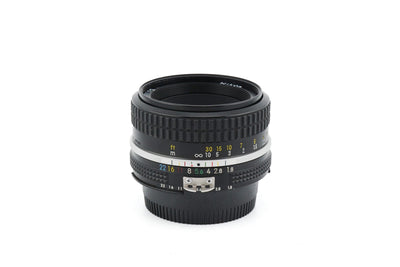
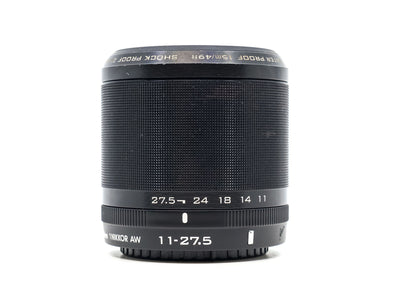
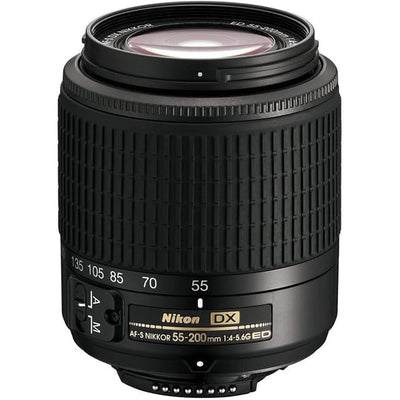
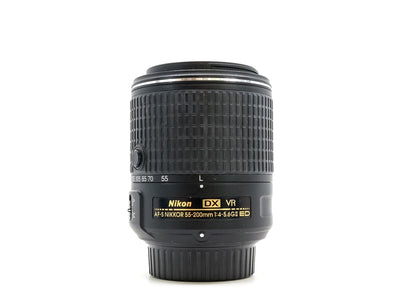
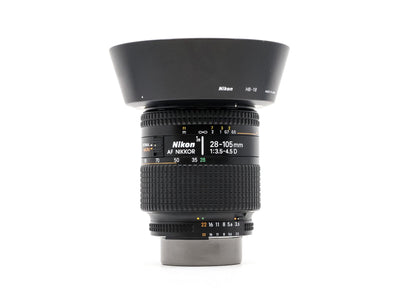
It uses the Nikon F mount (DX). A key detail: the D5300 has no focus motor in the body, so autofocus only works with lenses that have their own motor (AF-S, AF-P, and third-party equivalents like Sigma HSM or Tamron with motor). Older AF/AF-D lenses mount and meter light, but focus only manually. You can see options in our collection of Nikon F mount lenses.
Is it good for starting in photography?
Yes, it is one of the best entry points to the Nikon system. It allows you to shoot in manual, learn aperture and shutter speed, and grow without changing bodies. Its 24 MP sensor and articulated screen make it versatile. Just keep in mind that it has a single control dial and is not touch-sensitive, somewhat less agile than more recent models.
Is it good for video recording?
It records Full HD 1080p up to 60p and has a built-in stereo microphone plus an external microphone input, which greatly improves audio. The fully articulated screen helps for basic vlogging and difficult angles. Its limitations: contrast-detect autofocus in video is slow for tracking movement and there is no headphone output for monitoring sound.
How is the battery and battery life?
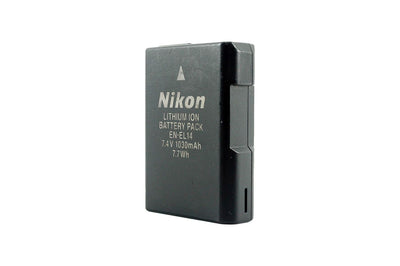
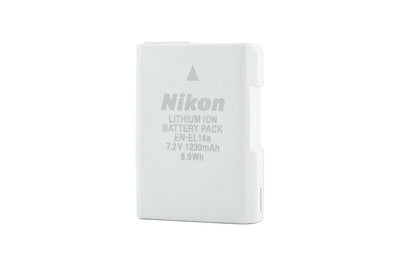
It uses a battery EN-EL14a (EN-EL14 compatible) with MH-24 charger. The CIPA battery life is 600 shots, though in practice it usually stays at 400-500 and drops significantly if you use Live View, video, or GPS a lot. When buying second-hand, check that the battery is original and healthy; old generic ones last little.
Does it have image stabilization?
No, it does not have in-body stabilization. In Nikon, stabilization is in the lens (marked VR). That is, if you mount a lens without VR, there will be no optical stabilization. Keep that in mind when choosing your lens, especially for handheld shooting in low light or telephoto lenses.
What should I check when buying a used D5300?
Ask for the shutter count, as the shutter is a wear part (it is read from the EXIF of a recent photo). Confirm which lens is included and that it is AF-S/AF-P to have autofocus. Check the sensor with a photo of a white wall at f/16-f/22 to detect dust, check the hinge of the articulated screen, and that Wi-Fi/GPS work if you are interested.
Is it reliable today?
Yes, it is a robust body that ages well. Its critical point is shutter wear: bodies in this range are often cited around 100,000 cycles as a reference (not an official verified figure), so it is advisable to know the actual count. With a healthy battery and a lens with a motor, it remains a very reasonable purchase.
To complete it, take a look at replacement batteries, memory cards, or camera cases.
Full condition scale
Each unit is inspected at 28 points and graded honestly. Here's how we translate each level so you know what to expect:
Barely any signs of use. Almost flawless aesthetics and perfect operation.
Light marks from normal use. Optically clean and fully functional.
Visible signs of use (scuffs, marks, brassing). Works perfectly.
Not guaranteed for use: sold for parts or repair.
Why buy used?
Depreciation is already absorbed: the same gear for much less than new.
Many classics and discontinued gems only exist today on the used market.
28-point inspection and 6-month warranty included on every unit.
Extending the life of a camera avoids manufacturing and transporting a new one.