Got this camera?
Sell it with us.
Free appraisal in 24 h, payment in 48 h and free shipping. We inspect it, refurbish it and give it a second life.
Inspected at 28 points by our technicians. Every unit is unique. More details
Subscribe and save on your order
Get a discount code by email.
Thanks for subscribing.
Use the code at checkout:
CAMERAMARKET10
Protect your purchase for longer.
Your camera ships with 6 months of coverage included. Extend it if you want professional photographer peace of mind.
Units sold for parts do not qualify for extended warranty.
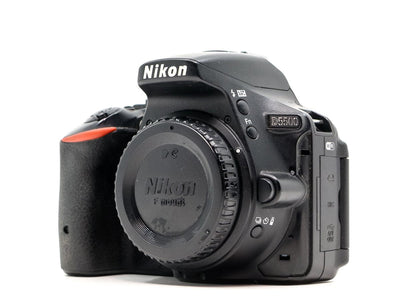
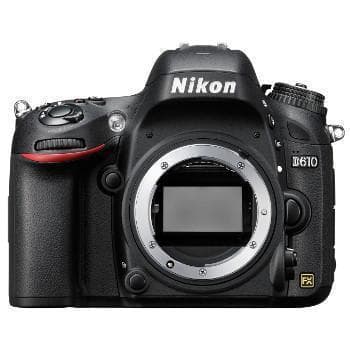
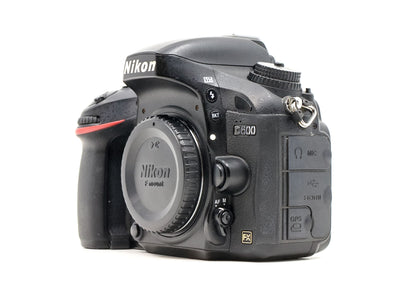
View warranty terms and conditionsThe Nikon D610, announced in October 2013, was Nikon's entry point into the full-frame (FX format) world for the advanced enthusiast seeking high-end image quality without the price of a professional DSLR. It was born as a revision of the D600: it retains its excellent 24.3-megapixel CMOS sensor made by Sony, but debuts a new shutter that corrects the famous problem of oil spots and dust that affected its predecessor, and raises the burst rate to 6 fps with a silent mode at 3 fps.
It is a camera designed for portrait, landscape, and travel, where quality takes precedence over speed. Its full-frame sensor offers wide dynamic range and very solid high ISO performance for its era. The body is made of magnesium alloy with environmental sealing, an optical viewfinder with 100% coverage, and dual SD slots, a luxury uncommon in this range.
It is not an action camera or for serious video: its 39-point autofocus is heavily concentrated in the center, and video remains at 1080p at 30 fps. But as an honest and affordable way to enter full-frame with the Nikon F mount, it remains a solid recommendation years later.

Read more Read less
The Nikon D610 is a full-frame digital SLR camera that arrived on the market in 2013 as an evolution of the D600, offering an excellent balance between image quality and price for photography enthusiasts. With its 24.3-megapixel CMOS sensor and Nikon F mount, this camera became a popular choice for those looking to make the leap to full-frame without the demands of professional series.
Key Features
- 24.3-megapixel FX CMOS sensor (full-frame, 35.9 x 24.0 mm)
- EXPEED 3 image processor for high speed and noise reduction
- Nikon F mount, compatible with Nikkor AF-S and AI-P lenses
- Electronically controlled focal-plane shutter, speed from 1/4000 to 30 seconds
- Multi-CAM 4800 AF system with 39 focus points (9 cross-type)
- Continuous shooting up to 6 frames per second
Ideal for
Perfect for advanced amateurs and semi-professional photographers seeking a reliable full-frame DSLR for portraits, landscapes, or travel photography, with solid performance in low-light conditions.
Condition
Second-hand product inspected by Camera Market. Includes a standard 6-month warranty and 24-48 hour shipping from Barcelona.
What lenses are compatible with the Nikon D610?
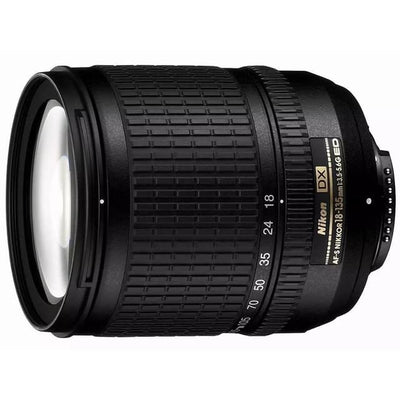
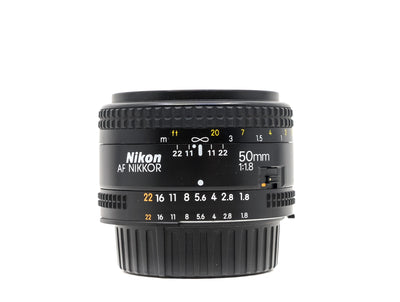
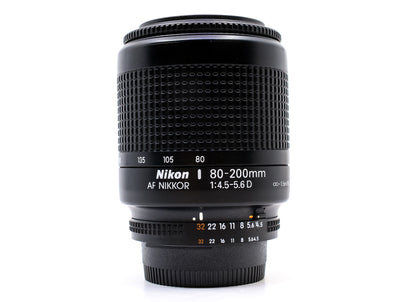
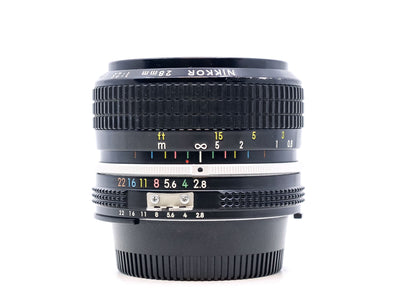
It uses the Nikon F mount, with interchangeable optics. Being full-frame (FX), it takes full advantage of the sensor with FX lenses; if you mount a DX lens (cropped format), the camera crops to about 10 MP. As it includes an in-body focus motor, it focuses both modern AF-S lenses and older 'screwdriver' AF-D lenses. Note that AF-P lenses (more recent) are not compatible with this body. You can see options in our collection of Nikon F mount lenses. If a specific lens is critical for you, it is advisable to confirm its compatibility before purchasing.
Is it good for someone starting in full-frame?
Yes. It is precisely its audience: enthusiasts who want to make the leap to full-frame at a contained price. It offers excellent image quality, a robust and ergonomic body, and complete controls. That said, it is a camera of image quality over speed: it shines in portrait, landscape, and travel, not in fast action.
What battery does it use and how long does it last?
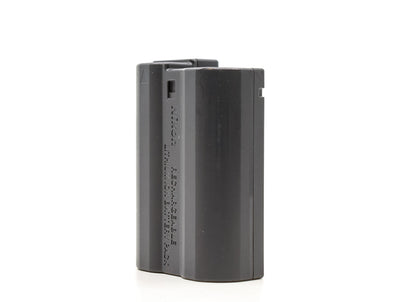
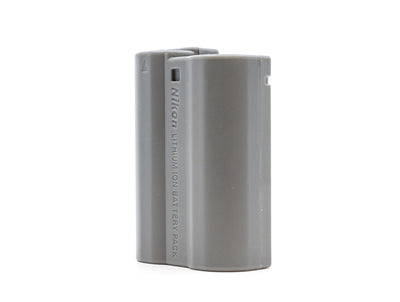
It uses the battery Nikon EN-EL15 Li-ion, the standard for this range, with the MH-25 charger. The official CIPA autonomy is around 900 shots per charge (approximate figure, it is advisable to contrast it with the official Nikon datasheet). When buying second-hand, verify that the battery is original and holds its charge well, as degraded or third-party ones greatly reduce autonomy.
Is it suitable for recording video?
For basic video, yes: it records Full HD 1080p at 30 fps with manual audio control and HDMI output. But it is not its strength: it has no 4K, nor 1080 at 60p, and autofocus in video (contrast-based) is slow with visible hunting. It also lacks focus peaking. If video is your priority, this is not the camera.
Is it reliable bought second-hand? What about the oil problem?
The D610 was born precisely to correct the D600's oil spot defect, with a new shutter, and generally resolved it. Even so, there are occasional reports from users who still saw spots. The practical verification is to take a photo at f/16–f/22 over a uniform white surface and check if spots appear, especially in the upper left corner: dust can be cleaned, but recurrent oil spots are the alarm signal.
What should I check before buying it used?
Check the shutter count via EXIF of a recent photo: the shutter is rated at 150,000 actuations. Confirm it is a D610 and not a resold D600 (look at the plate or menu; they are almost identical externally). Inspect the condition of the sealing, rubber grips, both SD slots, and the eyepiece rubber, and verify that it includes the MH-25 charger, which separately represents an extra cost.
Does it have in-body stabilization?
No. The D610 does not incorporate in-body stabilization (IBIS): stabilization depends on the lens, that is, on optics with VR (Vibration Reduction) system. Keep this in mind if you shoot handheld in low light or with telephoto lenses.
To complete it, take a look at spare batteries, memory cards, or camera bags.
Full condition scale
Each unit is inspected at 28 points and graded honestly. Here's how we translate each level so you know what to expect:
Barely any signs of use. Almost flawless aesthetics and perfect operation.
Light marks from normal use. Optically clean and fully functional.
Visible signs of use (scuffs, marks, brassing). Works perfectly.
Not guaranteed for use: sold for parts or repair.
Why buy used?
Depreciation is already absorbed: the same gear for much less than new.
Many classics and discontinued gems only exist today on the used market.
28-point inspection and 6-month warranty included on every unit.
Extending the life of a camera avoids manufacturing and transporting a new one.