Got this camera?
Sell it with us.
Free appraisal in 24 h, payment in 48 h and free shipping. We inspect it, refurbish it and give it a second life.
Inspected at 28 points by our technicians. Every unit is unique. More details
Subscribe and save on your order
Get a discount code by email.
Thanks for subscribing.
Use the code at checkout:
CAMERAMARKET10
Protect your purchase for longer.
Your camera ships with 6 months of coverage included. Extend it if you want professional photographer peace of mind.
Units sold for parts do not qualify for extended warranty.
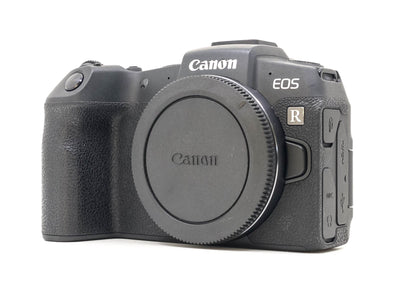
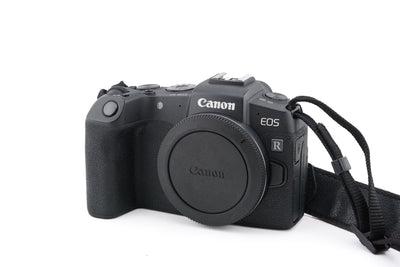
View warranty terms and conditionsThe Canon EOS RP arrived in March 2019 with a very clear idea: to make the full-frame sensor accessible. It was one of the most affordable full-frame cameras at the time of its launch, and that entry-level vocation still defines it. It mounts a 26.2 MP CMOS sensor (a variant of the one debuted by the EOS 6D Mark II) with a DIGIC 8 processor, inside one of the smallest and lightest full-frame bodies that exist: barely 485 g with battery and card.
It is a camera designed for the enthusiast who wants to make the leap to the large sensor without spending more, or for the Canon user with EF lenses looking for a compact second body. It shines in portrait and everyday use: its Dual Pixel autofocus with eye detection is reliable, delivers excellent straight-out-of-camera JPEGs, and its fully articulated and touchscreen is very comfortable for difficult angles and for vlogging in 1080p.
It is worth being honest: it is not an action camera or a serious video camera. Its 5 fps burst (which drops to about 4 fps with continuous tracking), the lack of in-body stabilization (IBIS), and limited 4K (with a 1.7x crop and without Dual Pixel AF) mark its boundaries. As an economical ticket to the RF system, which also takes advantage of old EF lenses via an adapter, it more than fulfills its role.

Read more Read less
What lenses are compatible with the Canon EOS RP?
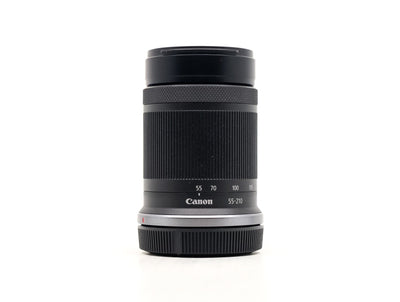
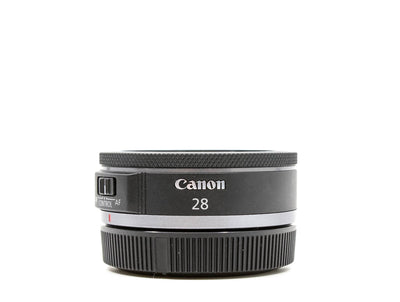
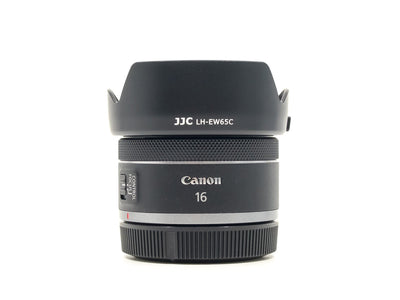
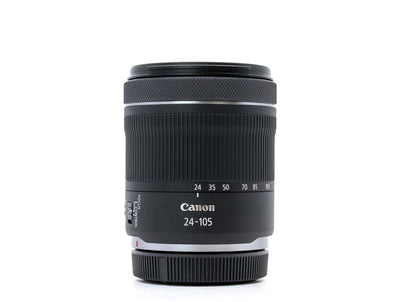
It mounts native Canon RF mount lenses. Additionally, it accepts EF and EF-S lenses from Canon DSLRs via the Canon EF-EOS R adapter (with EF-S it works in APS-C crop mode). It does not directly mount EF-M or third-party lenses without the appropriate adapter.
Is it suitable for someone starting in photography?
Yes. It is one of the most economical ways to enter full-frame, with easy Canon menus, good straight-out-of-camera JPEGs, and autofocus with eye detection that is very comfortable for portraits and casual use. It is an excellent first large-sensor camera, as long as you accept its limitations in burst and video.
How does it record video? Is the 4K usable?
The 4K is limited: only at 24p, with a 1.7x crop (your wide-angle stops being wide), without Dual Pixel AF (slow focusing), and with noticeable rolling shutter. In practice, the good video from this camera is Full HD 1080p, which does have Dual Pixel AF and no crop. For vlogging in 1080p with the articulated screen, it performs very well.
How long does the battery last?
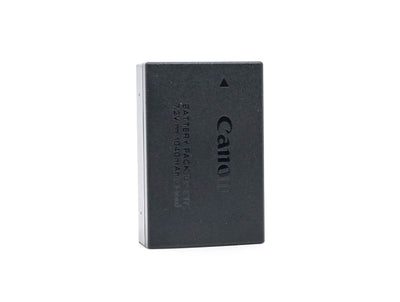
It uses the LP-E17 battery and its CIPA rating is around 250 shots per charge, which is weak. For a day of use, it is advisable to carry one or two spare batteries. The good news is that in many scenarios it supports charging and power via USB-C, useful with a power bank.
Does it have in-body stabilization (IBIS)?
No. The EOS RP does not have internal stabilization; it depends on the lens having IS. In low-light photos or handheld video, you will notice this lack if the lens does not stabilize. Keep this in mind when choosing a lens.
Is it reliable to buy it second-hand?
It is a robust camera for photography, but it does not have weather sealing, so it is advisable to check for dust on the sensor (ask for a photo of the sky at f/16 to detect spots). Also check the shutter count, the condition of the articulated screen and the viewfinder eyecup, and that the firmware is updated.
What should I verify before buying specifically?
Clarify if it includes the EF-EOS R adapter (key if you have EF lenses and increases the price if missing) and which lens comes in the kit: the usual one was the RF 24-105 f/4-7.1 IS STM, which should not be confused with the 24-105 f/4L. Confirm that the battery is original and in good health, and rule out that the offer mistakenly includes EF-M lenses, which do not mount.
To complete it, take a look at spare batteries, memory cards, or cases.
Full condition scale
Each unit is inspected at 28 points and graded honestly. Here's how we translate each level so you know what to expect:
Barely any signs of use. Almost flawless aesthetics and perfect operation.
Light marks from normal use. Optically clean and fully functional.
Visible signs of use (scuffs, marks, brassing). Works perfectly.
Not guaranteed for use: sold for parts or repair.
Why buy used?
Depreciation is already absorbed: the same gear for much less than new.
Many classics and discontinued gems only exist today on the used market.
28-point inspection and 6-month warranty included on every unit.
Extending the life of a camera avoids manufacturing and transporting a new one.
Compatible with this product

What the experts say about this camera
External review · Not Camera Market content. If it does not play, refresh the page.